
Junior Jits, 7 to 12 years
Where a quiet kid gets louder
Seven to twelve is the age where jiu jitsu stops being a game and starts being a skill. It is also the age where the two most common reasons parents ring us turn up: a child who has gone quiet, and a child who is having a hard time from somebody at school.
Confidence is not something you tell a child they have. It is something they work out about themselves.
When it runs
- Monday17:00 to 17:45Junior Jits
- Wednesday17:00 to 17:45Junior Jits
- Friday16:30 to 17:15Little Jits and Junior JitsCombined class
Up to 24 in a Junior Jits class.
Times come straight from the club timetable, so this page cannot drift out of date on its own.
See the full timetableWhat a Junior Jits class actually looks like
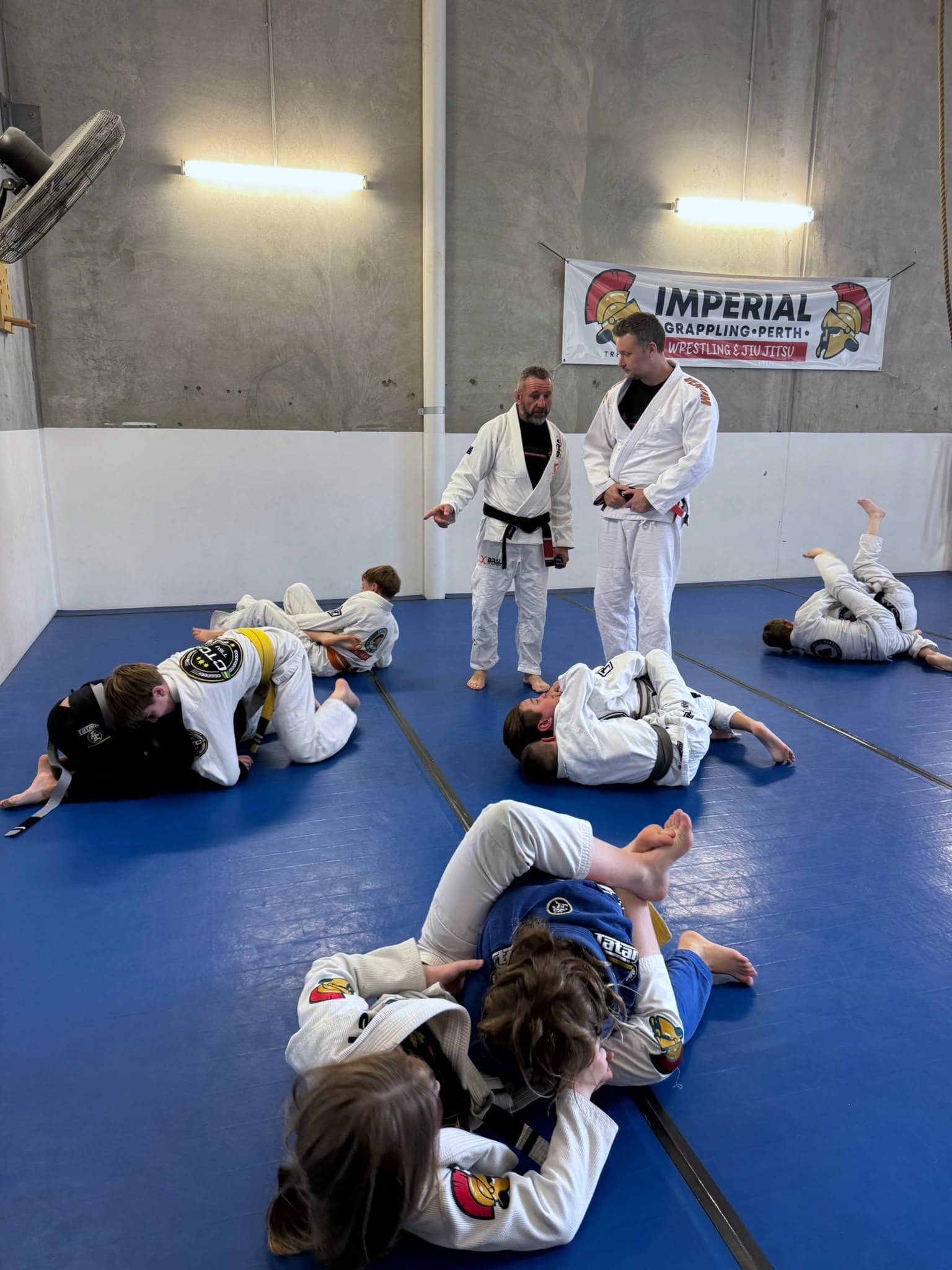
Forty five minutes, and it is a real training session rather than a play hour. They will know they have done something.
Warm up, properly
Movement drills that double as technique. By the time the class proper starts they are warm, they have shaken the school day off, and they are paying attention.
A technique broken into pieces
One position or escape, shown slowly, then split into parts they can manage. They drill it with a partner until it starts to work. Nobody is expected to get it first time and nobody is left behind while the class moves on.
Live rounds against a resisting partner
This is the part that makes jiu jitsu different from a class where you punch a pad and go home. They practise against somebody who is genuinely trying not to let them do it. It is controlled, it is matched by size and experience, and it is the reason the confidence is real rather than assumed.
The grading ladder
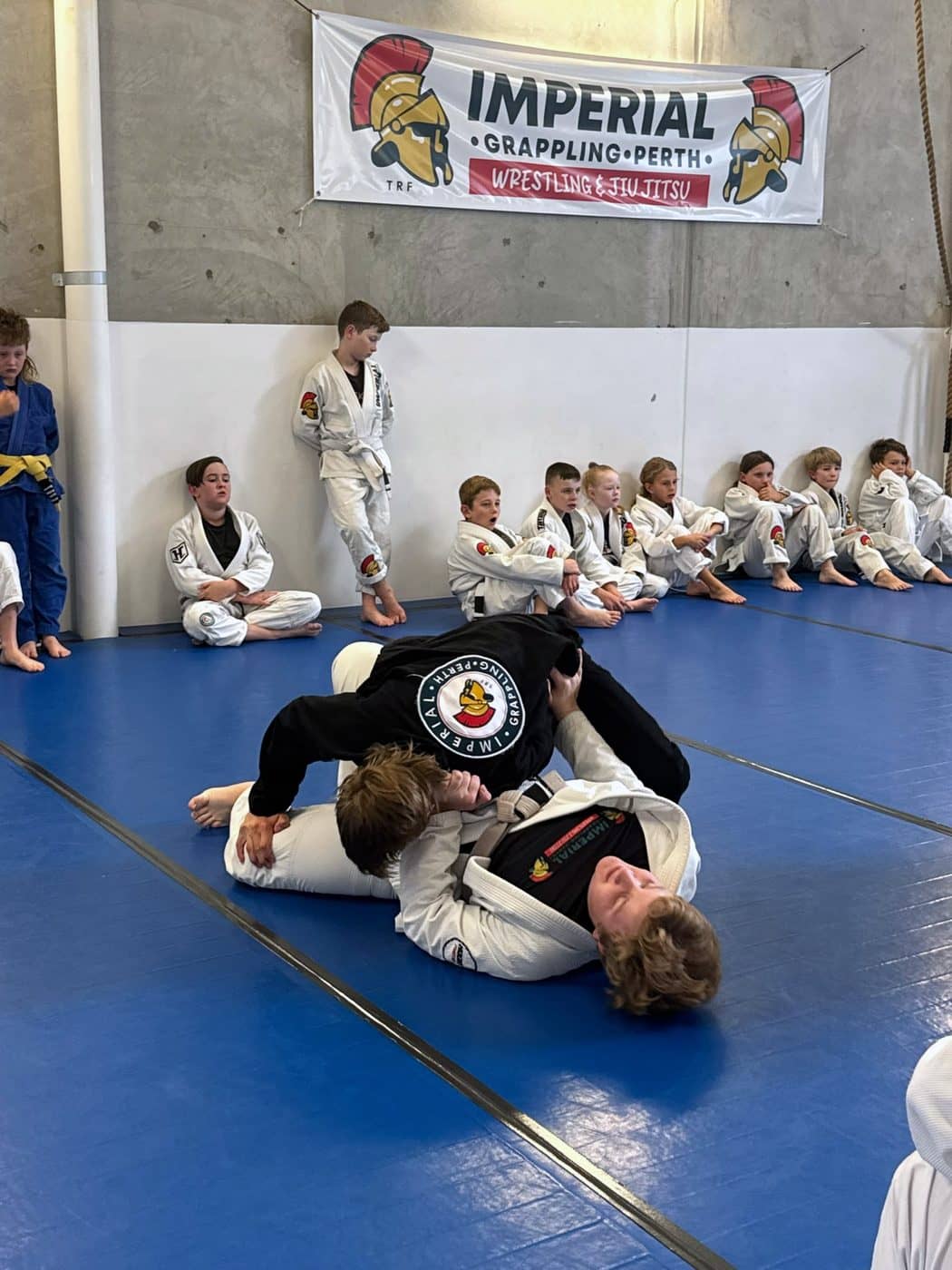
Kids grades run white, grey, yellow, orange then green. Stripes and belts are earned over time and they can see exactly where they are and what comes next. For a child who has never been top of anything, having a visible ladder they are genuinely climbing changes how they carry themselves.
Who this is for
- Seven to twelve year olds at any level, including complete beginners
- Quiet children who need somewhere they are not competing for attention
- Children who are dealing with someone at school and feel powerless about it
- Children who have tried team sport and did not take to it
The honest answer
My child is shy, or is being picked on
These come up constantly and they are related, so here is how this class actually helps rather than a promise that it fixes everything.
A shy child gets a room where nothing is shouted at them, where the group is small enough that they are noticed, and where progress is individual rather than a competition against everyone else. They are not going to be thrown in front of a crowd. They work with a partner, they get better at something specific, and the confidence follows the competence rather than the other way round.
For a child having a hard time from somebody, the useful thing about grappling is that it is the one martial art where you can practise the real thing at full effort without hurting anyone. A child who has genuinely handled someone bigger than them in training carries themselves differently, and that alone changes how they get treated. Most of them never need to use any of it, which is the point.
Nobody here is teaching your child to fight. They are learning to control a situation and stay calm in it, which is a very different skill and a far more useful one.
What they need on the day
Shorts and a t-shirt
No gi needed to start. Kit comes later once they know they are staying.
A water bottle
Forty five minutes of real training. They will need it.
Short nails, bare feet
Cut before you come, not in the car park. Everyone trains barefoot.
Nothing to prepare
No fitness requirement and no experience assumed. Beginners start every term.
Grading
How they move up
Grading here runs on attendance rather than a one-off test. Keep turning up and a stripe follows roughly every six months. There is nothing to cram for the night before and nothing that gets sprung on them on the day.
Let them try one
The first class is free and there is nothing to sign. Come down, let them have a go, and let them tell you afterwards whether they want to come back.