
Teens, 13 to 16 years
Somewhere better to be on a Monday night
Thirteen to sixteen is the age where a lot of them quietly stop doing things. Sport falls away, the phone fills the gap, and the friendship group they end up with is whoever happens to be around. This class exists to be a better option than that.
A room full of people their own age, and an adult who expects something of them.
When it runs
- Monday17:45 to 18:30Teens
- Wednesday17:45 to 18:30Teens
- Friday17:15 to 18:00Teens and Adult Fundamentals
Up to 12 in a teens class.
Times come straight from the club timetable, so this page cannot drift out of date on its own.
See the full timetableWhat a teens class actually looks like
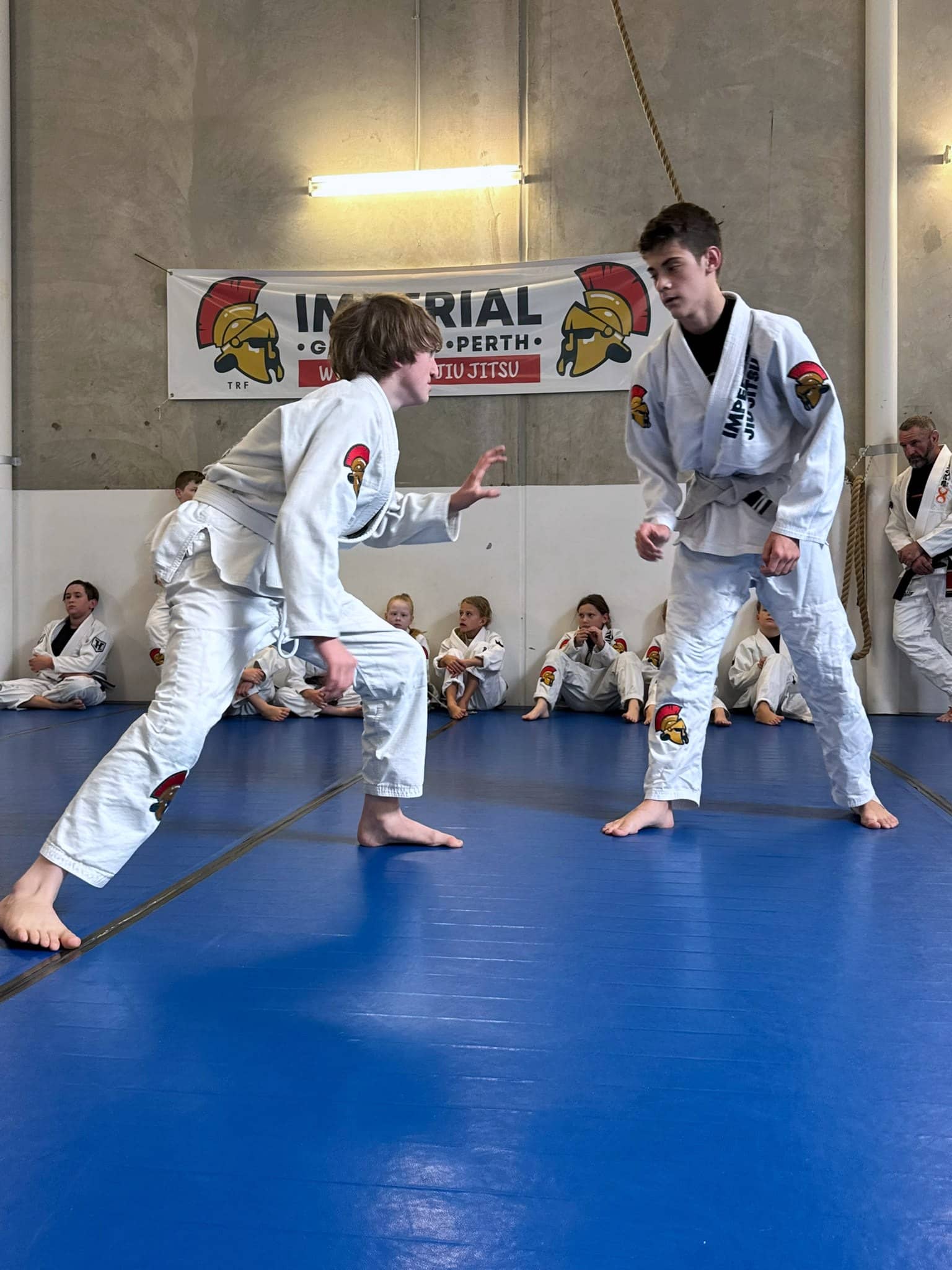
Forty five minutes, in their own session, with people their own age. Not tacked on to the kids class and not thrown in with grown adults.
It is physically hard
This matters more than it sounds. A teenager who has spent the day sat down needs something that genuinely takes it out of them. They finish these sessions tired in a way that a phone cannot replicate, and they sleep better for it.
There is a standard, and it is held
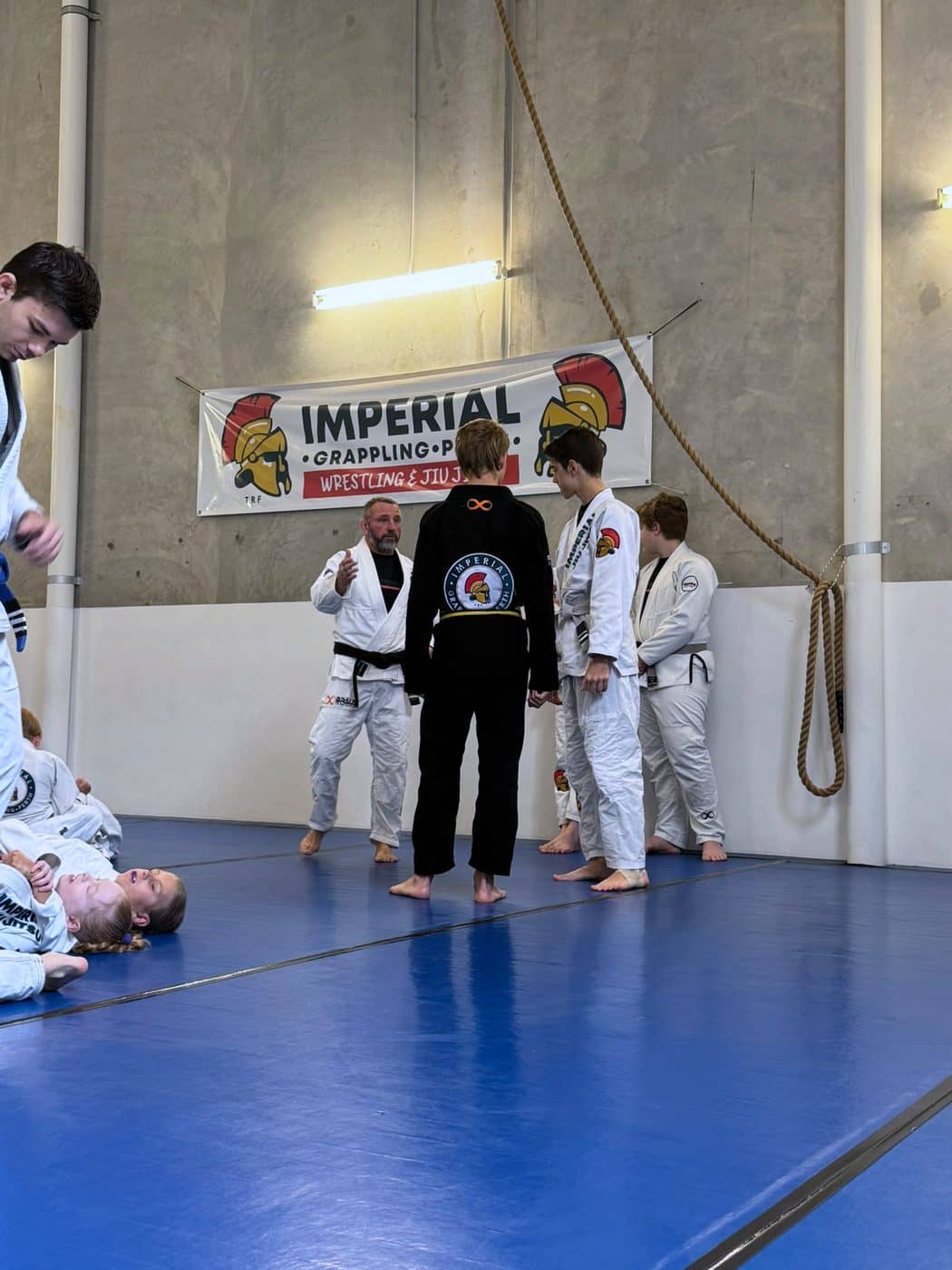
Turn up on time, shake hands, listen when someone is talking, look after your partner. Not because it is a rule on a wall but because the room runs that way and everyone in it holds it. Most teenagers respond well to an adult who expects something specific of them and does not budge.
Live rounds
They train against a resisting partner of similar size and experience. It is competitive, it is safe, and it gives them somewhere legitimate to test themselves. That instinct does not go away at fifteen. It is much better aimed at a mat than at a car park.
The social bit is half of it
They train with the same people every week, they get beaten by them and beat them, and a group forms out of that. For a teenager who is short of a good crowd, this is often the part that actually changes things.
Who this is for
- Thirteen to sixteen year olds, beginners included
- Teenagers who have drifted out of team sport and not replaced it
- Teenagers who need a hard physical outlet and are not getting one
- Teenagers who are not thriving in the crowd they are currently in
The honest answer
They will not want to come
Probably not, at first. Very few of them are enthusiastic about a new room full of strangers, and a teenager saying no to something is not the same as a teenager not needing it.
What tends to work is the first couple of classes being free and low stakes. There is nothing to sign and nothing to pay, so it can genuinely be one class and then a decision. That takes the pressure off in a way that a term-long commitment does not.
What tends not to work is dropping them off and driving away. Come in with them the first time. They will be fine after that.
If they hate it, they hate it, and you have lost an hour. Most do not, because a room where somebody expects something of them and they get to test themselves against people their own age is quite rare by that age.
Sixteen is not a hard cut-off. Whether a sixteen year old is better off in teens or in with the adults depends on their experience, their size and what they are comfortable with, and it is a conversation rather than a rule. Some fifteen year olds already train with the adults here because they had outgrown the teens class.
What they need on the day
Shorts and a t-shirt
Nothing to buy first. Kit up later if they stay.
A water bottle
They will finish it.
Short nails, bare feet
Done before they arrive. Everyone trains barefoot.
No fitness required
Getting fit is the effect of training, not the entry requirement.
Grading
How they move up
Grading here runs on attendance rather than a one-off test. Keep turning up and a stripe follows roughly every six months. There is nothing to cram for the night before and nothing that gets sprung on them on the day.
One class, then they decide
Book their first couple in and let them make their own mind up afterwards. It is a far easier conversation than asking them to commit to something first.